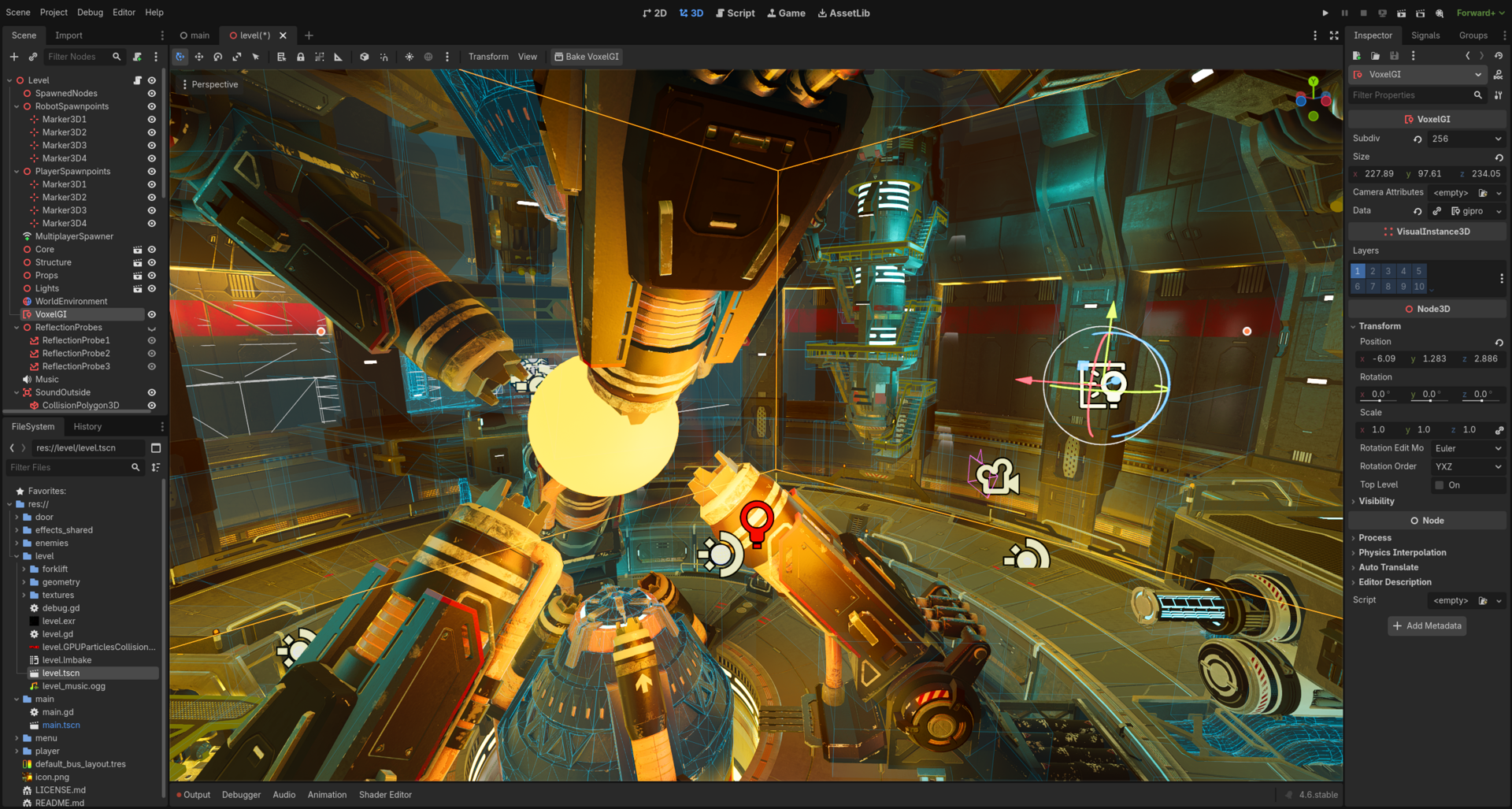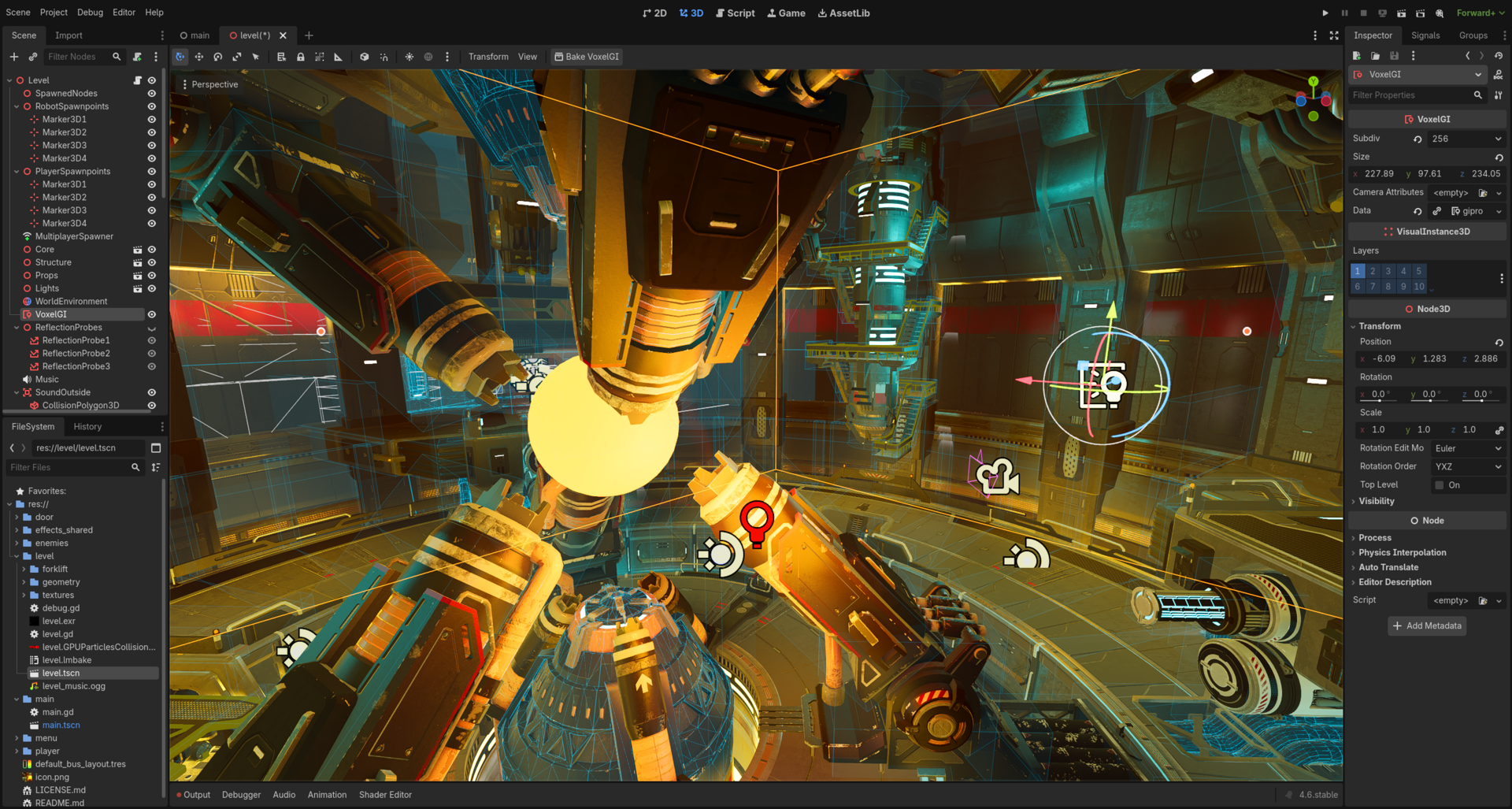
Godot 4

Godot 4 Shader Tutorial: 7 Visual Effects Every Indie Dev Should Know

Shaders are what separate a game that looks ‘done’ from one that feels polished. In Godot 4 (currently stable at version 4.6), writing your own shaders is surprisingly approachable thanks to GDShader—a language modeled on GLSL ES 3.0 that integrates directly with the Godot Inspector. Whether you want a flickering outline on an enemy or …

Read More

Godot 4 Multiplayer Tutorial for Beginners

Godot 4.6 ships with a surprisingly capable built-in networking stack, and you do not need a paid backend or third-party middleware to get a working online game off the ground. Using GDScript and three core systems — ENetMultiplayerPeer for connections, MultiplayerSpawner for syncing who’s in the game, and MultiplayerSynchronizer for keeping positions and state consistent …

Read More

How to Optimize Your Godot 4 Game for Android and iOS

Mobile performance is one of the biggest stumbling blocks for indie developers shipping Godot 4 games on Android and iOS. A project that runs smoothly in the editor can stutter badly on a mid-range phone, drain battery in minutes, or crash on older devices — and the fixes are rarely obvious. The good news is …

Read More

Godot 4 Save System: Save & Load Game Data With JSON

Saving game progress is something almost every game needs, and Godot 4 makes it straightforward with its built-in FileAccess and JSON classes. In this tutorial you will build a complete, reusable save-and-load system in GDScript — no plugins, no third-party libraries — that works across all export platforms in Godot 4.4 through the current 4.6.x …

Read More

How to Build a 2D Platformer in Godot 4 From Scratch

Godot 4 is one of the most capable free game engines available today — and a 2D platformer is the ideal first project. It exercises every core system: physics, input, animation, level design, and scene management. By the end of this guide you will have a playable game with a moving character, tile-based levels, and …

Read More