

If you run a small or local business, you’ve probably stared at your “About” page and wondered whether a photo of yourself belongs there — or whether it’s an amateur move that undercuts the polished brand you’re trying to build.
Table of Contents
The short version: for most small businesses, yes, your face helps. People buy from people, especially when the service is local, personal, or trust-dependent. But there are real exceptions, and there’s a right and wrong way to do it. This guide walks through when to show your face, when to skip it, and how to do it without looking unprofessional.

Quick Answer
Yes, in most cases — a clear, professional photo of you (or your team) on the About page, and ideally near your bio or contact info, builds trust faster than stock photography or no photo at all. The main exceptions are businesses where anonymity is a genuine selling point or a safety concern, or where the brand is deliberately bigger than any one person (e.g., you’re scaling past a solo-founder identity).
Why a Real Photo Usually Helps
Small business websites compete with a sea of templated, interchangeable-looking sites. A real photo is one of the fastest ways to signal “there’s an actual human running this, and they’ll stand behind the work.” That matters most for service businesses — contractors, consultants, coaches, local shops, healthcare and legal practices — where the buyer is really hiring a person, not just a logo.
There’s also an SEO angle worth knowing. Google’s quality guidelines (often referred to as E-E-A-T — Experience, Expertise, Authoritativeness, and Trustworthiness) put weight on content being tied to a real, identifiable person rather than an anonymous “admin” byline. A visible owner or author with a genuine photo and a short bio is one of the signals that can support how your pages are evaluated, especially for anything that touches money, health, safety, or legal advice.
Practically, visitors scan an About page in seconds. A confident, well-lit photo next to a short, specific bio (what you do, who you help, how long you’ve done it) does more to build comfort than another paragraph of marketing copy.
When It’s Better to Skip the Face Shot
Not every business needs a headshot on the homepage. If you run an e-commerce store where the product is the star, a founder photo can be a nice touch on the About page but doesn’t need to be front and center. If your business is scaling into a team or franchise model, leaning too hard on one founder’s face can box the brand in — it’s harder to hand off or sell later if customers feel they’re buying from one specific person.
There are also legitimate privacy and safety reasons to stay off-camera — some home-based business owners, or anyone who’s had harassment or safety concerns, reasonably choose not to publish their face. In those cases, lean on team photos of the workspace, behind-the-scenes shots, client testimonials with permission, or a well-written, specific bio instead. The goal is the same — proving a real, accountable operation exists — even if your face isn’t the vehicle.
If you’re a freelancer or consultant actively building a personal brand (coaching, design, writing, local trades where referrals matter), the calculus flips back toward “show your face,” since you are the product.
Tips / Common Mistakes
Use a real photo, not stock. Visitors and search engines alike treat obviously generic stock headshots as a red flag rather than a trust signal — it reads as inauthentic even when the business is legitimate.
Keep it current and consistent. A photo that’s several years (or several haircuts) out of date creates a small but real disconnect when a customer meets you in person. Re-shoot every couple of years or whenever your look changes significantly.
Light and background matter more than gear. You don’t need a studio — a clean background, soft natural light (near a window, facing the light), and a phone camera will outperform a dim, cluttered selfie. If you have a team, shoot everyone against the same background in the same session so the set looks cohesive.
Don’t bury it. Put the photo on the About page at minimum, and consider a smaller version near your bio on blog posts, the contact page, or a “meet the owner” section on the homepage if trust is a big part of your sales process.
Pair the photo with a short, specific bio — years in business, what you specialize in, a credential or two. A photo with no context is just decoration; a photo with three concrete facts is a trust signal.
If you’re camera-shy, a photo of you doing the work (on a job site, in the kitchen, at the register) often feels more natural and authentic than a stiff studio headshot, while giving you the same trust benefit.
Explore more: more web development guides.
Frequently Asked Questions
Does putting my face on my website actually improve conversions?
There’s no universal guaranteed number, but for trust-dependent, local, or service-based businesses, a real photo next to a clear bio consistently makes visitors more comfortable reaching out or buying, compared to no photo or a stock image. The effect is strongest when the photo is paired with specifics (experience, credentials) rather than shown alone.
What if I don’t like how I look in photos?
You don’t need a glamour shot — a clean, well-lit, approachable photo where you’re looking at the camera and dressed as you normally would for work is enough. Hiring a local photographer for a short session (often a few hundred dollars) usually solves the “I look awkward” problem better than retakes on your own.
Should every employee have a photo, or just the owner?
For a very small business, the owner’s photo alone is usually enough. As you add team members customers interact with directly (stylists, techs, account managers), adding their photos too helps customers know who they’ll be working with — just keep the style and background consistent across everyone’s shot.
Is a photo necessary for B2B or purely online businesses?
It’s less critical than for local, in-person services, but still helpful. B2B buyers research who they’re dealing with, and a founder or team photo on the About/company page supports credibility during that research — it’s just not as make-or-break as it is for a local plumber or dentist.
Build It With GTStudios
Need help with your website, app, or small-business tech? GTStudios builds web, apps, and software for small businesses. See how GTStudios can help.
Want dev news in your inbox? Subscribe to the free newsletter.
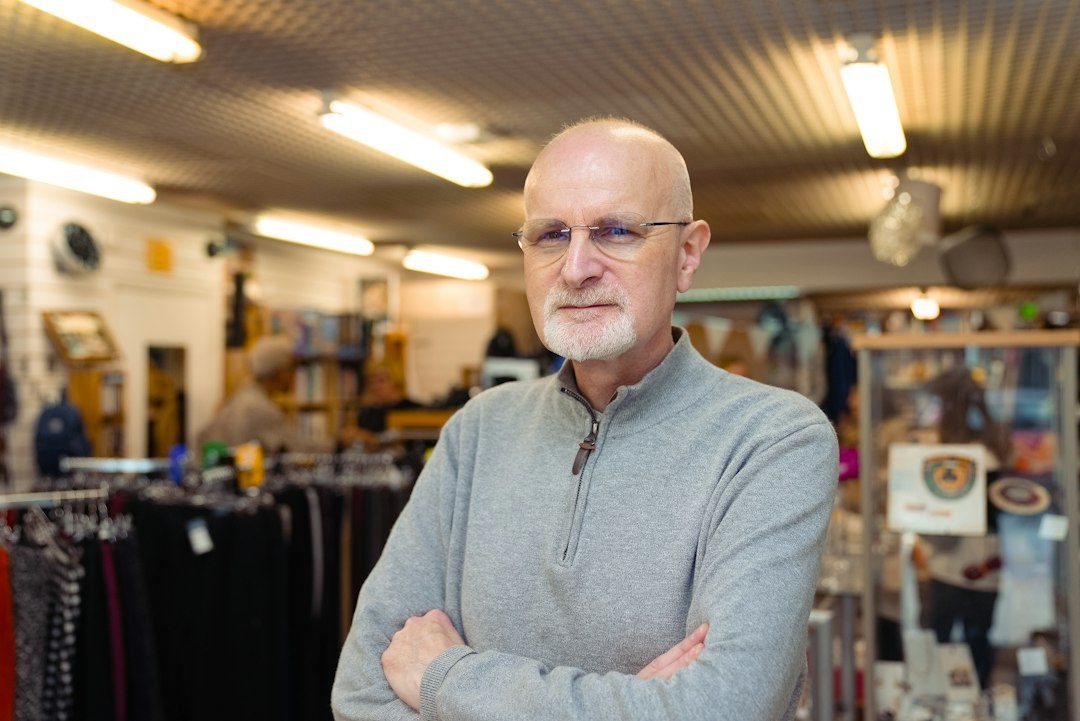
Photo by Vitaly Gariev on Unsplash.