
Email marketing automation is still — by a wide margin — the highest-ROI marketing channel available to small businesses, with returns regularly hitting $36-$42 per dollar spent. The gap is not between email and other channels; it’s between businesses that have any automation at all and businesses that send the occasional manual newsletter. Here are the seven automated email sequences that consistently move revenue for small businesses, ranked roughly by ease-of-deployment.
Table of Contents
Welcome Sequence Sets The Tone
The welcome sequence (3-5 emails over 7-14 days after signup) is the single highest-converting email automation. People who just signed up are at peak interest, and a well-structured welcome series converts 50-86% better than promotional emails sent later, per HubSpot’s marketing benchmarks.
A simple, effective structure: Email 1 (immediate, deliver promised lead magnet), Email 2 (day 2, founder story / brand values), Email 3 (day 4, best content recap), Email 4 (day 7, soft offer), Email 5 (day 12, social proof + clearer offer). Test it for 90 days before tweaking.
Abandoned Cart For E-Commerce
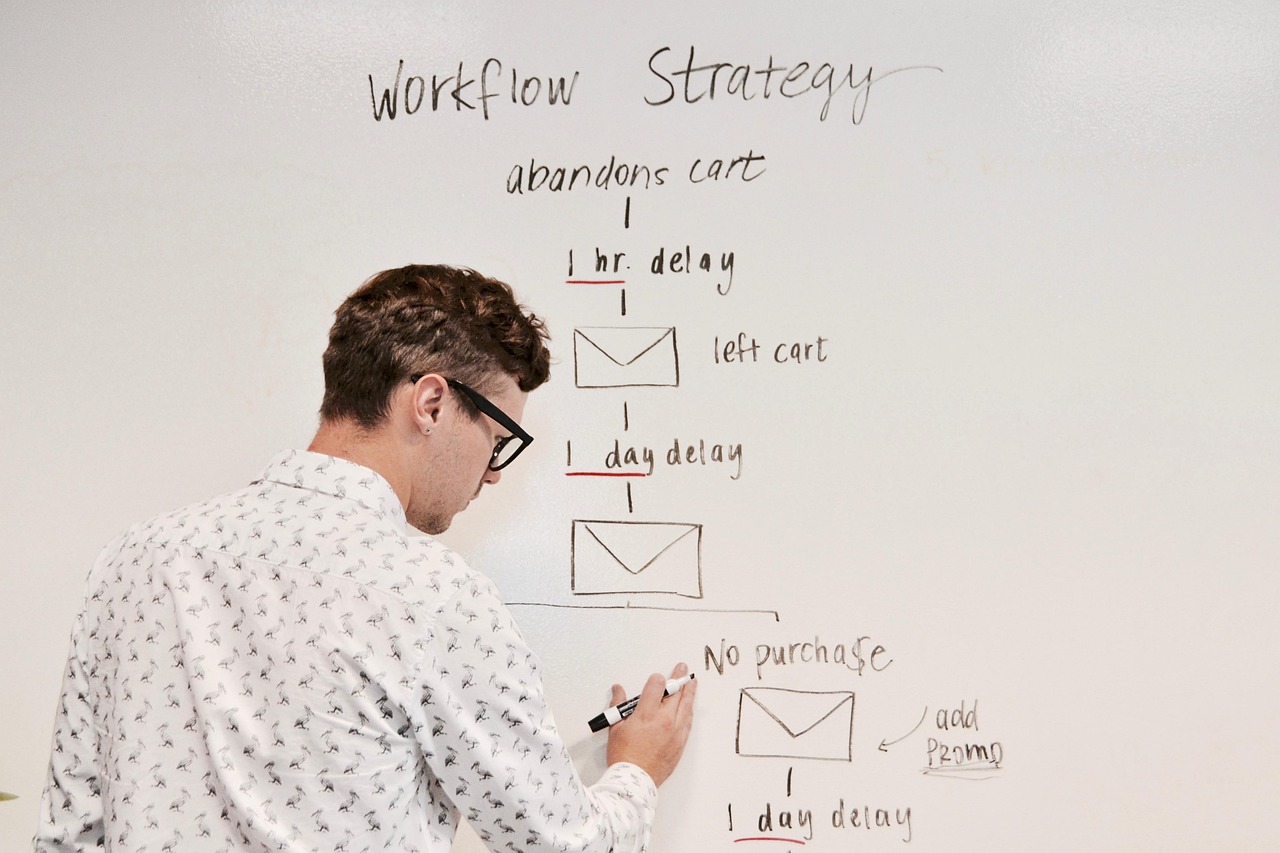
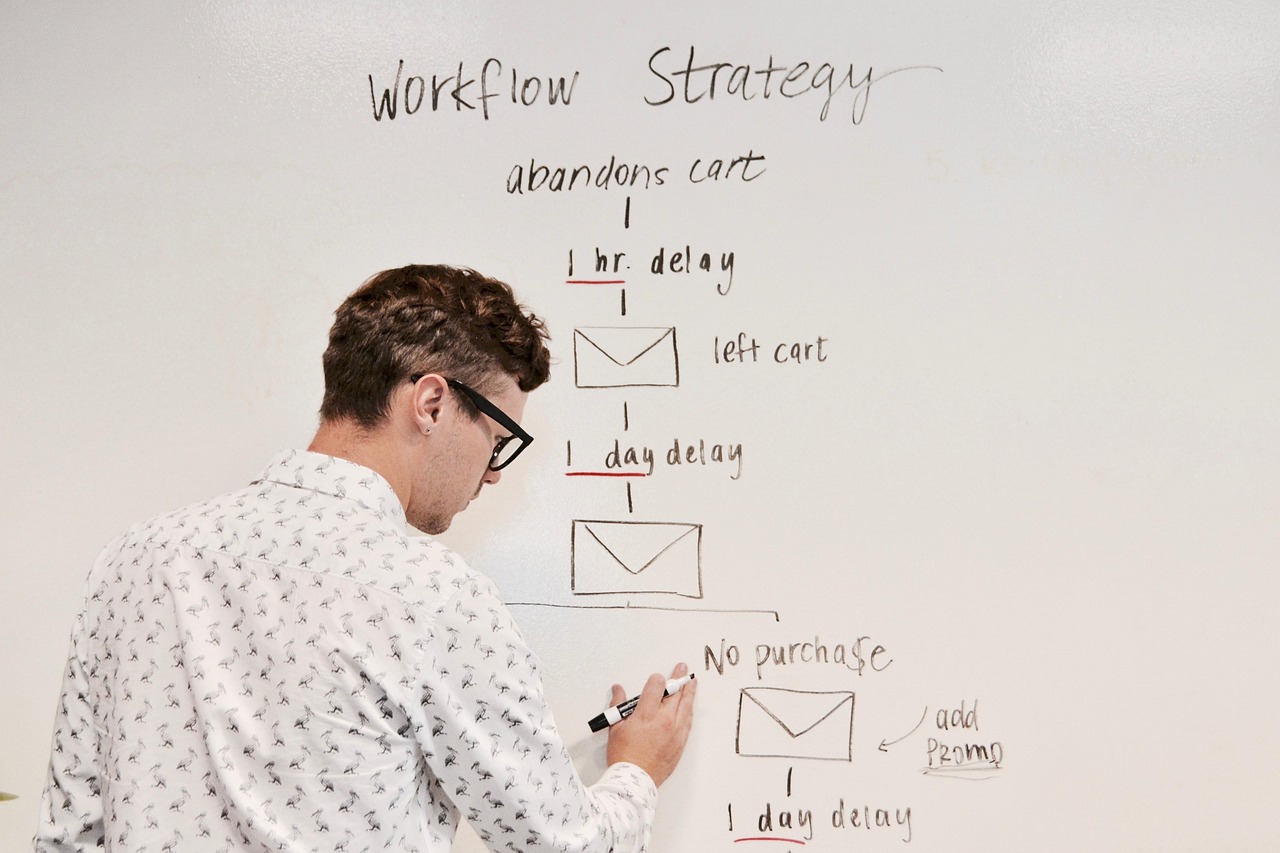
If you sell products online and don’t have abandoned cart email marketing automation, you are leaving 5-15% of recoverable revenue on the table. The standard pattern: Email 1 (1 hour after abandonment, “did you have trouble?”), Email 2 (24 hours, social proof + reviews), Email 3 (72 hours, modest discount).
Klaviyo, Mailchimp, and Shopify Email all support this out of the box. Setup time is one afternoon; ROI is typically positive within the first week. For a deeper look at the broader e-commerce stack this fits into, our shopify vs woocommerce small business post covers platform-specific automation tradeoffs.
Lead Nurture For Service Businesses
Service businesses underuse email marketing automation because the buying cycle is longer and content needs are heavier. But nurture sequences for B2B and high-consideration B2C consistently move close rates 15-30% when paired with a defined sales process.
A typical nurture flow: weekly value email for 8-12 weeks, with occasional soft offers and explicit “ready to talk?” CTAs. Content should match buying-stage intent — early educational, mid comparative, late objection-handling and case studies.
Re-Engagement Saves The List
Every email list decays at roughly 25-30% per year through unsubscribes and disengagement. A re-engagement sequence (3-4 emails over 2-3 weeks aimed at subscribers who haven’t opened in 60+ days) recovers 5-15% of dormant subscribers and lets you cleanly remove the rest. Cleaner lists mean better deliverability for everyone else.
Mailchimp, ConvertKit, and Klaviyo all have segment-based triggers for this. Run it quarterly.
Post-Purchase Thank You And Cross-Sell
After a purchase, customers are at a second peak interest moment. A 3-email post-purchase sequence (immediate thank-you, day 3 product care/usage tips, day 14 review request + relevant cross-sell) increases repeat purchase rate 20-40% in most categories.
Don’t squander this with generic transactional emails. Brand them. Add personality. Make the customer feel like they made a great choice. Shopify’s research on post-purchase email strategy consistently ranks this as one of the top two automation ROI plays for e-commerce.
Behavioral Triggers For Segmentation

The next layer up is behavioral email marketing automation — emails triggered by specific user actions (visited pricing page, downloaded specific guide, watched 75% of demo video). These convert 2-5x higher than broadcast emails because they’re contextually relevant.
Setup is more complex; you need event tracking wired into your CRM or marketing automation platform. For broader integration thinking, our api integration for business covers the API patterns that make behavioral triggers actually work end-to-end.
Wrap Up
Email marketing automation is unsexy, well-understood, and reliably profitable. Most small businesses have implemented zero of these sequences, which is precisely why the ones that do implement them outpace competitors. Pick welcome and abandoned cart this month. Add nurture and post-purchase next month. Measure quarterly. The compounding revenue from these flows usually exceeds whatever you’d spend on the latest shiny acquisition channel.
Frequently Asked Questions
What’s the best email automation tool for small business?
For e-commerce, Klaviyo above ~$30K/month revenue, Shopify Email below. For service business, ConvertKit or HubSpot. For all-purpose, Mailchimp’s free tier covers basics, ActiveCampaign at scale.
How much should I budget for email marketing tools?
$0-50/month under 1,000 subscribers, $50-300/month at 1,000-10,000, $300-1,500/month above 10,000. Most platforms scale by list size and feature tier.
How often should I send marketing emails?
Weekly is the standard sweet spot for most small businesses. Daily works for content-heavy brands and breaking-news contexts. Less than monthly and you lose audience engagement and deliverability advantage.
Do automated emails hurt deliverability?
No, well-segmented automated emails typically have higher engagement than broadcasts, which improves deliverability. Poor automation (sending to everyone, ignoring engagement signals) can hurt — but that’s a setup problem, not an automation problem.
Should I use AI to write my email sequences?
Use AI for first drafts and variation testing, but human edit for voice and brand fit. Pure AI-generated sequences underperform human-edited ones by 20-40% on engagement in our testing.