
AI startup news moved fast this week. AI agents showed up inside messaging apps, voice assistants, phone dialers and Amazon’s seller dashboard, while investors put hundreds of millions into training data, enterprise automation and AI-first drug discovery. Here’s our AI startup news roundup for the week ending September 27, 2026: the product launches, funding rounds and model releases that builders, founders and small-business owners should know about.
Table of Contents
App & Product Launches
Ando raises $20M to take on Slack with agent-native messaging
Founder Sara Du launched Ando, a team chat app where AI agents are full participants with their own identities and inboxes. Agents can join channels, browse conversations and start outreach on their own. TechCrunch reports that the $20M pre-seed and seed came from Accel, Index Ventures and Emergence. Du is going straight at a category giant. If you’re in the same position, see our guide on what to do if your app idea already exists as a competitor.
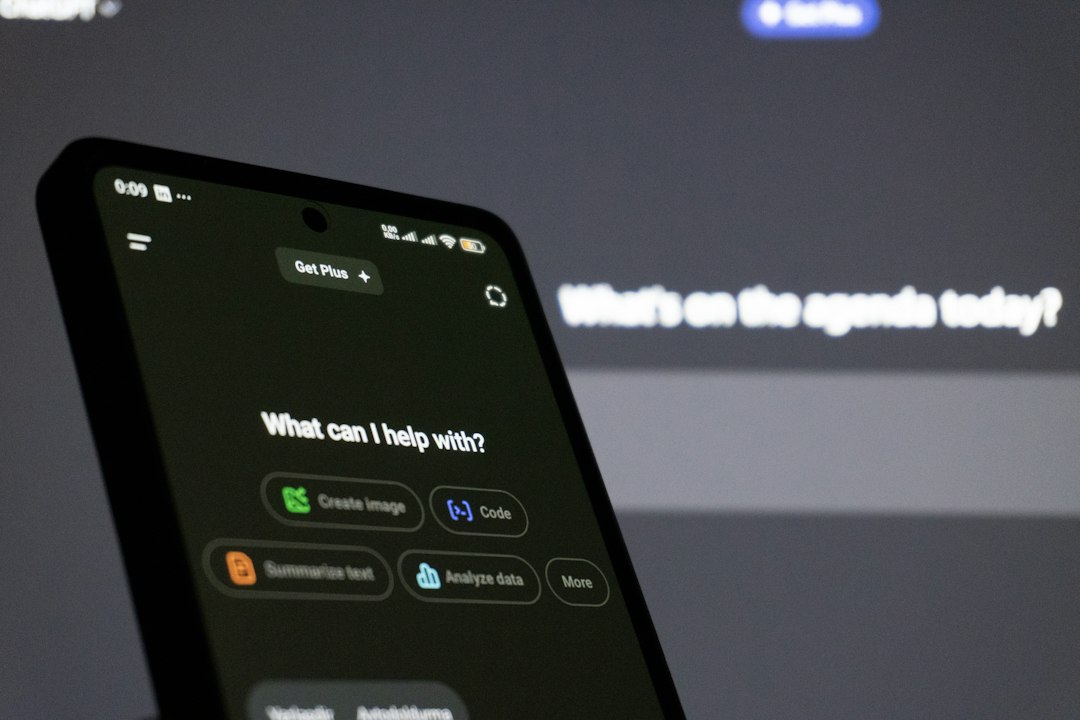
ChatGPT Voice gets plugins, GPT-6 models and ChatGPT Work
On September 23, OpenAI shipped three upgrades to ChatGPT Voice. Users can now choose GPT-6 Astra, Sol or Luna as the backend, and voice plugins can reach email, calendar and Slack. Voice also runs inside ChatGPT Work, so you can create documents, spreadsheets and websites by talking, according to 9to5Mac.
Google tests “Call for Me,” letting Gemini phone businesses for you
Google is testing a feature that lets Gemini call businesses for you. It can book reservations, reschedule appointments or check whether an item is in stock, and you can follow along with a live transcript and take over at any time. TechCrunch says it’s starting with US Pixel 11 owners who pay for a Gemini subscription. Local businesses should expect more AI callers and should keep hours and details current. Our post on how often to post on Google Business Profile covers the basics.
Amazon opens Seller Central to outside AI agents, starting with Claude
At Amazon Accelerate on September 23, Amazon released a US beta plugin that lets sellers manage listings, inventory, pricing and analytics through Anthropic’s Claude or Amazon’s Quick assistant, without opening Seller Central. Sellers approve every action before it runs. Amazon is also giving primary account holders 12 months of Quick Plus for free.
PrismML puts tiny LLMs on Qualcomm smart glasses
At Snapdragon Summit, the Caltech-founded startup PrismML showed a 2-billion-parameter “1-bit Bonsai” vision-language model running on Qualcomm’s Snapdragon AR1 Gen 1 platform. The company says its compression makes models about 4x smaller while keeping almost all of their benchmark performance. No consumer glasses have been announced yet (TechCrunch).
Startup & Tech Business
Snorkel AI triples its valuation to $3.5B
Snorkel AI raised a $350M Series E led by Insight Partners and S32, valuing the company at $3.5 billion, up from $1.3B 17 months earlier. The company has moved from labeling software to delivering finished training datasets. Its annualized revenue run rate is now about $375M after growing roughly 18x in a year. That’s among the clearest AI startup news signals that training data is still a large market.
Ema raises $77M as “AI employees” go after SaaS
Ema closed a $77M Series B led by Bengaluru’s Creaegis, with Accel, Section 32 and Prosus adding to their stakes. The company coordinates multiple agents to automate HR, IT and finance workflows. It reports more than 50 enterprise customers, including Google and Microsoft, and bookings above $150M (TechCrunch).
Databricks buys spreadsheet startup Row Zero
Databricks acquired Row Zero, a cloud spreadsheet built by former AWS and Tableau engineers that handles more than 1 million live rows. It will plug into Databricks’ Genie AI agent. The price wasn’t disclosed. It’s the company’s fifth deal this year, and CEO Ali Ghodsi said, “We intend to do many more acquisitions like this in the future” (TechCrunch).
Enveda secures $311M for nature-derived AI drugs
Biotech startup Enveda raised $311M to move more drug candidates discovered from natural compounds with AI into clinical trials. It’s one of the largest AI-bio rounds of the month (TechCrunch).

OpenEvidence raises $250M at a $15B valuation
Business Insider reported that the AI clinical search company OpenEvidence raised $250M at a $15B valuation, 25% above its $12B mark in January. The round reflects how quickly AI tools for physicians are being commercialized.
Lightspeed targets $250M for early-stage AI in India
Lightspeed is raising a new $250M India fund focused on early-stage AI companies (TechCrunch). Founders outside the US now have another dedicated pool of AI seed capital.
AI & Tools
Google ships Gemini 3.8 Flash TTS with 2,000+ voices
Google released Gemini 3.8 Flash TTS and Flash-Lite TTS. The models support more than 100 languages and dialects, let you design an original voice from a natural-language description, and give line-by-line control over pacing and delivery. They’re rolling out in the Gemini API and Google AI Studio. App studios building narration, dubbing or voice agents should test them this week.
Claude autonomously discovers a CRISPR-like enzyme system
Anthropic launched a life sciences research group and lab. Its first result: Claude agents found a previously uncharacterized phage enzyme system, which Anthropic named array-associated reverse transcriptases (ART). The run took about 21.5 hours, 949 agent sessions and roughly 215M tokens. What ART does is still unknown, and lab experiments are under way.
xAI’s Grok 4.7 competes on price
xAI released Grok 4.7 for coding and knowledge work at $2 per million input tokens and $6 per million output tokens. xAI reports a 71% score on DeepSWE v1.1. It’s another low-cost option for teams that route requests across several models.
Alibaba cuts voice API prices by up to 95%
Alibaba’s Qwen team shipped Qwen-Audio 3.1, a five-model voice stack with better multilingual recognition and filler-word cleanup. It also cut prices by up to 95% for speech recognition, about 70% for TTS and about 85% for realtime audio. This is good AI startup news for anyone whose margins depend on speech costs.
Docker releases open-source skills for AI coding agents
Docker published reusable agent skills on GitHub that give AI coding agents repeatable workflows for building, testing, debugging and optimizing containerized apps.
Gemini 4 is in post-training
Google DeepMind chief Koray Kavukcuoglu said Gemini 4 is in early post-training with “promising results.” He hopes to ship “much earlier” than year-end but gave no firm date. Plan your model upgrades with a Q4 flagship refresh in mind.
Sources
- TechCrunch — Snorkel AI triples valuation to $3.5B as demand for AI training data booms
- TechCrunch — Ando wants to take on Slack with a team messaging app for humans and agents
- GeekWire — Amazon opens its seller tools to outside AI agents, starting with Anthropic’s Claude
- Anthropic — Claude discovers a novel enzyme system
- Google — Gemini 3.8 Flash TTS and Gemini 3.8 Flash-Lite TTS
Frequently Asked Questions
What was the biggest AI startup news this week?
Snorkel AI’s $350M Series E at a $3.5B valuation led the funding news. On the product side, AI agents showed up in Ando’s messaging app, ChatGPT Voice, Google’s “Call for Me” and Amazon Seller Central.
What is Ando and how is it different from Slack?
Ando is a new team messaging app, backed by $20M from Accel, Index Ventures and Emergence, in which AI agents have their own identities and inboxes and can join conversations like teammates.
What’s new in ChatGPT Voice?
As of September 23, ChatGPT Voice supports plugins (email, calendar, Slack), lets you choose GPT-6 Astra, Sol or Luna, and works inside ChatGPT Work to create documents and spreadsheets by voice.
What does Google’s “Call for Me” feature do?
It lets Gemini phone businesses for you to make reservations, reschedule appointments or check stock, with a live transcript and the option to take over. It’s starting with US Pixel 11 owners who have a Gemini subscription.
Which AI tools got cheaper this week?
Alibaba cut Qwen voice API prices by up to 95%, and xAI launched Grok 4.7 at $2 per million input tokens and $6 per million output tokens.