
You’ve spent weeks refining an app idea, then a quick search turns up an app that does almost the same thing. It’s a gut-punch, but it rarely means the end of the road. A competitor usually shows that real people already want the problem solved, and that some of them pay for a solution.
Table of Contents
This guide walks through what to do next: how to size up the competition, find the gaps they leave open, narrow your audience, validate before you write code, and recognize the few cases where walking away really is the smart call.

Quick Answer
Don’t abandon the idea. Study the existing app, especially its lower-rated reviews, to find what users are missing. Then pick a specific audience or problem the competitor serves poorly, test demand with real users, and only build once you can explain clearly why someone would switch to you.
Step-by-Step: What to Do When a Competitor Already Exists
Step 1: Treat the competitor as market proof. An existing app means the problem is real and people are already spending time or money on it. Many well-known products were not first to market. They won by executing better or serving people the early players overlooked. Silence in a market is often a bigger warning sign than competition.
Step 2: Map the landscape. Search the Apple App Store, Google Play, and the web for direct competitors (same solution, same audience) and indirect ones (spreadsheets, generic tools, or manual workarounds). Note pricing model, platforms supported, core features, and how each one describes itself. Paid tools such as Sensor Tower or AppTweak can add download and keyword data, but browsing the stores yourself is free and often enough at this stage.
Step 3: Mine the reviews. Read the two- and three-star reviews of each competitor. Complaints that keep recurring, and features users keep asking for, point at real gaps. Tag each one as a missing feature, a usability problem, a pricing complaint, or a platform gap. Tools like Appbot can automate collection, but a spreadsheet works for a handful of apps.
Step 4: Build a simple feature gap grid. List features down the side and competitors across the top, and mark each cell as fully supported, partial, or missing. Patterns show up quickly. Look for a column of gaps that matches a specific group of frustrated users.
Step 5: Choose your wedge. Decide how you will win. Common wedges include a narrower audience (for example, one profession or hobby instead of everyone), a simpler experience, a different pricing model, a neglected platform, a language or region the incumbent ignores, or a better integration with tools your audience already uses. Features alone are a weak wedge because a larger competitor can copy them. A niche community and a distribution channel are much harder to copy.
Step 6: Validate before you build. Talk to people who use the competitor today. Ask what frustrates them and what they would need to switch. Then test demand cheaply with a landing page, a waitlist, a clickable prototype, or a manual version of the service. If people will not sign up or commit to a pilot, that tells you something valuable before you spend on development.
When a Competitor Should Make You Rethink
Competition is not always a green light. Reconsider or pivot if a dominant, well-loved app already serves your audience well, you cannot identify any underserved segment, and you have no distribution advantage such as an existing audience, partnerships, or community access. When all three are true, head-on competition is expensive and slow.
Also watch for the opposite trap: a crowded market with no clear revenue. If none of the existing apps appear to make money and users show no willingness to pay, the issue may be the business model rather than execution.
If you do pivot, you don’t have to start over. You can often keep your research and switch to an adjacent audience, a complementary tool that plugs into the incumbent, or a different platform.

Tips and Common Mistakes
Don’t say ‘we’re just better.’ Vague claims don’t move users. Write a one-sentence positioning statement: ‘Unlike X, our app is built for Y, so Z.’ If you can’t finish it, keep researching.
Don’t copy feature-for-feature. Matching a mature product’s long feature list means competing on its strongest ground. Launch with a smaller, sharper core that solves one painful problem exceptionally well.
Don’t ignore switching costs. People stay with apps that hold their data and habits. Offer easy import, a clear reason to switch, and a fast first-use experience.
Don’t skip distribution planning. Decide early how your target users will find you, whether through app store search, a niche community, content, or partnerships. A good product nobody sees still fails.
Do keep watching competitors. Recheck reviews and update notes every few months, since rivals change pricing and features, and their new complaints can be your next opportunity.
Explore more: More App Development guides.
App idea competitor strategy FAQs
Is it bad if my app idea already exists?
Not usually. An existing competitor suggests the problem is real and that people are willing to use or pay for a solution. The real question is whether you can serve a specific group better than the current options do.
How do I find out what competitors are doing wrong?
Read their two- and three-star app store reviews, support forums, and social media mentions. Look for repeated complaints and feature requests, then group them into missing features, usability issues, pricing, and platform gaps.
Should I still build my app if a big company already has a similar one?
Possibly, if you focus on a niche the big company underserves, offer a clearly different experience or price, or have a distribution advantage. If you have none of those, consider pivoting to a complementary or adjacent idea.
Can I copy a competitor’s features?
Matching a few essential features is fine, since users expect them. But copying everything puts you in direct competition on the incumbent’s strongest ground. Lead with a smaller feature set that solves one specific problem better.
Build It With GTStudios
Need help with your website, app, or small-business tech? GTStudios builds web, apps, and software for small businesses. See how GTStudios can help.
Want dev news in your inbox? Subscribe to the free newsletter.
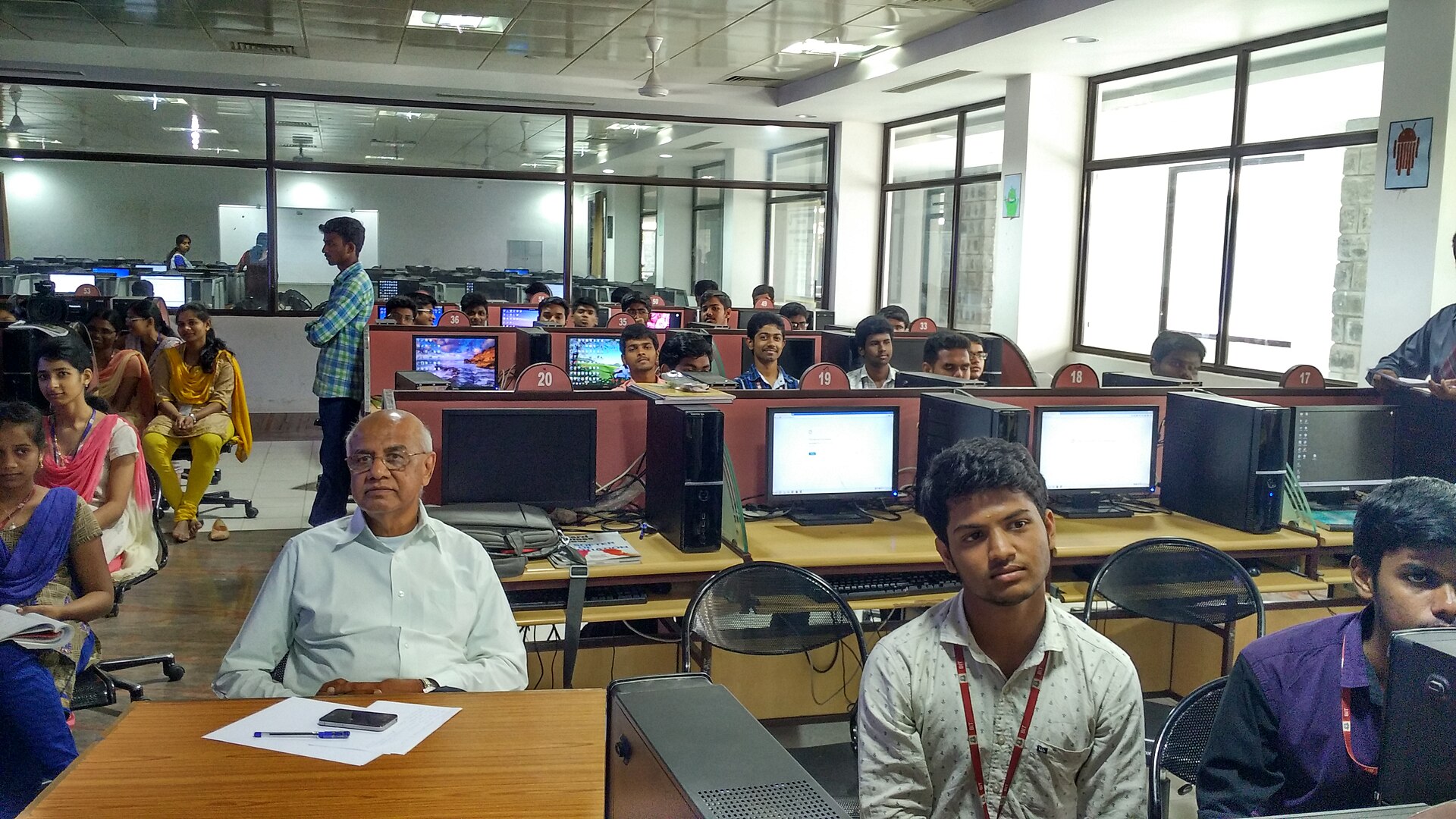
Photo: Thamizhpparithi Maari / CC BY-SA 4.0, via Wikimedia Commons.